|
|
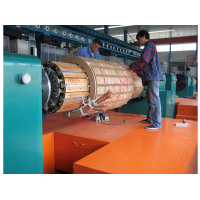
Cast Resin Transformer Curing Oven | Hot Air Circulation Drying Oven for Insulation Parts, RT–150°C, ±3°C UniformityCast Resin Transformer Curing Oven – Hot Air Circulation Drying Oven for Transformer & Insulation Parts Engineered for precision curing of cast resin transformers and electrical insulation components, this forced hot air circulation oven delivers ±3°C temperature uniformity across the entire working chamber — exceeding the JB/T 5520-91 industry standard (±5°C at 200°C). Designed for mold preheating, primary curing (post-casting), and secondary curing (post-demolding), it supports staged curing cycles across epoxy, polyester, and other resin systems. The system features dual-side heating chambers with low-surface-load electric elements, a high-volume centrifugal fan, and precision air ducts for continuous closed-loop circulation. External surface temperature stays ≤ ambient +15°C (vs. industry +35°C), eliminating workshop heat pollution and operator burn risk. Heating elements carry a 3-year warranty — triple the industry norm. Programmable multi-stage temperature curves, forklift-compatible tray loading, and optional PLC/HMI data logging make this oven the ideal choice for transformer manufacturers upgrading to consistent, energy-efficient, and digitally manageable curing processes. 
Collect
商品说明
Cast Resin Transformer Curing Oven — Hot Air Circulation Drying Oven for Transformer & Insulation Parts 1. Application & Working Principle Application Designed specifically for mold preheating, primary curing (post-casting), and secondary curing (post-demolding) processes in the manufacturing of cast resin transformers, insulation parts, and related electrical components. Also suitable for raw material pre-drying and staged curing cycles across various resin systems. Working Principle The oven operates on a forced hot air recirculation system. A high-volume, high-static-pressure centrifugal circulation fan draws air from the top suction chamber and forces it through dual-side heating chambers equipped with low-surface-load electric heating tubes. The heated air is then directed down through precision-engineered air ducts into the working chamber, contacting all surfaces of the workpiece simultaneously for uniform heat transfer. Air returns to the top suction chamber for reheating, creating a continuous closed-loop circulation path. This forced convection design eliminates temperature stratification and delivers consistent chamber uniformity within ±3°C across the entire working zone — exceeding the industry standard JB/T 5520-91 (±5°C at 200°C). 2. Key Specifications
3. Core Design Advantages ① Superior Temperature Uniformity (±3°C) We optimized circulation air volume and duct geometry specifically for transformer curing loads. The dual-side heating chamber design ensures hot air is distributed evenly across all tray levels. Result: cured coils and insulation parts achieve consistent dielectric properties and minimal internal stress, directly reducing rejection rate and rework costs. ② Low Surface Temperature — Energy Saving & Operator Safety Using premium insulation materials and a specialized thermal-break (anti-heat-bridge) construction, external panel surface temperature stays within ≤ ambient +15°C — less than half the JB/T 5520-91 allowance of +35°C. Benefits: (1) eliminates workshop heat pollution, (2) reduces HVAC cooling load, (3) improves operator safety with no risk of accidental burns during loading/unloading. ③ Long-Life Heating Elements (3-Year Warranty) Heating tubes use a low-surface-load design with large heat dissipation area, keeping tube surface temperature well below oxidation thresholds. This prevents scaling and extends service life significantly. We back this with a 3-year warranty on heating elements — triple the typical industry standard of 1 year. ④ Programmable Multi-Stage Curing Cycles The controller supports programmable temperature-time curves to match different resin systems (epoxy, polyester) and transformer sizes. Operators load the tray, close the door, and press start. The oven heats automatically per the programmed profile and triggers an audible/visual alarm upon cycle completion. Manual mode is available for process development and testing. ⑤ Robust Industrial Construction
4. Typical Process Flow
5. Quality Assurance & Service
6. Ordering Information To specify the correct model, please provide the following:
→ Contact our engineering team for a detailed quotation, chamber layout drawing, thermal uniformity test report, or factory video.
相关商品
|